

Car window tinting has become one of the most popular upgrades for vehicle owners today. It’s not just about style – tinted windows provide comfort, security and privacy. But what exactly is window tinting and why are so many people choosing it? Let’s find out.
What is car window tinting?
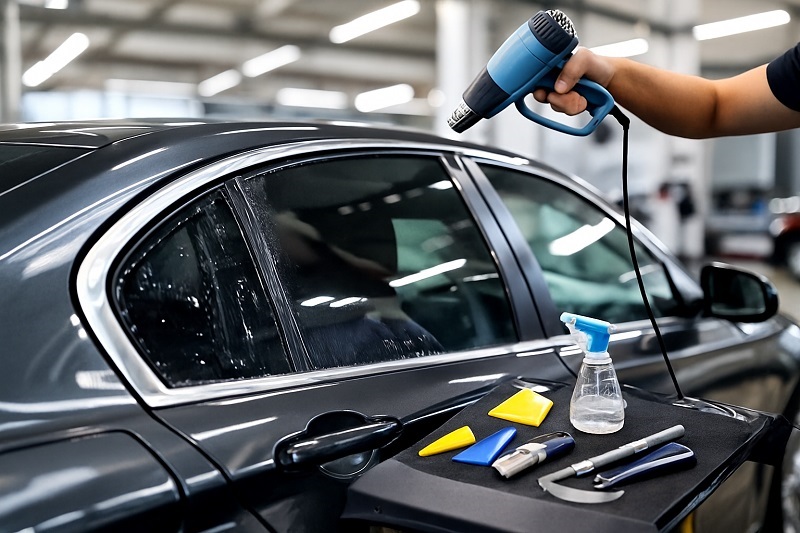
Car window tinting is the process of applying a thin, transparent film to the inside of your car windows.
This film is made from polyester material and dyed, metallized or ceramic layers.
The main purpose is to reduce the amount of sunlight, glare and UV radiation entering your vehicle.
Tinting films come in a variety of colors and materials – from basic tinted tints to advanced ceramic films that block heat and UV rays without affecting visibility.
Types of Car Window Tint
Here are the most common types of window tints used today:
Tinted Window Tint:
- Affordable and popular.
- Blocks sunlight and reduces glare.
- Provides a deep, stylish look but low heat rejection.
Metallized Window Tint:
- It contains small metal particles that reflect heat.
- More durable and resistant to scratches.
- Sometimes there may be interference with GPS or mobile signals.
Also Read: Dyed vs. Metalized vs. Ceramic Tint – Pros & Cons
Carbon Window Tint:
- Gives matte finish.
- Blocks infrared light, keeping the car cool.
- Does not fade with time.
Ceramic Window Tint:
- The most advanced option.
- Excellent heat and UV blocking ability.
- Provides clear visibility without any signal interference.
For a more detailed comparison of each type — performance, cost, lifespan — see our full guide: The Ultimate Guide to Car Window Tinting
Why is car window tinting so popular?
Tinting isn’t just about looks – it’s about performance and safety. Here are the main reasons why it is so popular:
1. Heat reduction
- Tinted windows can block up to 70% of solar heat.
- Keeps the interior cool during hot days.
2. UV protection
- Reduces harmful UV rays by up to 99%.
- Protects the skin and prevents the inner part from withering or cracking.
3. Enhanced Privacy
- This makes it difficult for outsiders to see inside your vehicle.
- Provides protection from theft and prying eyes.
4. Better attendance
- Gives your car an attractive, modern look.
- Available in a variety of colors to match your style.
5. Security benefits
- The film puts together broken glass during accidents.
- Prevents injuries and damage.
6. Energy efficiency
- Less need for air conditioning.
- Better fuel economy and battery performance in EVs.
Is window tinting legal everywhere?
- No way. Tint laws vary from country to country and state.
- Each area defines how dark or reflective your color can be.
- Before tinting your car, always check local window tinting laws to avoid fines or legal problems.
How long does window tint last?
Tint lifespan depends on material and installation quality:
- Tinted Film: 2-5 years
- Metallized or Carbon Film: 5-10 years
- Ceramic Tint: Up to 15 years or more
Proper care and cleaning can also increase its durability.
Final Thoughts
Car window tinting is more than just a cosmetic upgrade.
It improves comfort, protects your car interior and enhances your driving experience.
Whether you choose tinted, metallic, or ceramic film – make sure it suits your needs and complies with local laws.
FAQs
Car window tinting helps reduce heat, block harmful UV rays, and improve privacy. It also enhances your car’s appearance and protects the interior from fading.
Ceramic window tint is considered the best. It offers excellent heat rejection, UV protection, and clear visibility without affecting GPS or signal strength.
No. Tint laws vary by country and state. Always check local window tinting regulations before installation to ensure compliance.
Depending on the type, tint films can last anywhere from 2 to 15 years. Ceramic and carbon films usually have the longest lifespan.
High-quality ceramic or light tints don’t significantly affect night visibility. However, darker tints may reduce clarity in low light conditions.
It’s best to wait at least 3 to 5 days before washing your car. This allows the film to fully cure and adhere to the glass properly.