
Many people who own websites wonder if they can get their website to rank high without any backlinks. The answer is yes it is possible to rank a website without backlinks. This can happen when you focus on being an expert, in a topic making sure your content is really good and detailed understanding what people are searching for and making sure your website works perfectly. Ranking a website without backlinks is absolutely possible when you focus on authority, content depth, search intent and technical excellence and that is what website owners need to do.
Google is always changing how it ranks websites. Now we have AI Overviews..
This guide is about how to get a rank without using backlinks. It talks about strategies that really work. These strategies are especially good for websites and people who are new, to blogging. They can help websites and new bloggers get noticed.
Why Ranking Without Backlinks Is Possible Today?
Google and Artificial Intelligence search systems are giving importance to certain things. Google and Artificial Intelligence search systems are changing the way they work. Now Google and Artificial Intelligence search systems are looking for things when people search for something, on the internet.
Google and Artificial Intelligence search systems want to make sure people find what they are looking for easily.
- Topical depth
- Content clarity
- Search intent satisfaction
- Page experience
- Structured, scannable formatting
- High-quality internal linking
You can get a website to the top without any backlinks. This is because the website is the most trusted place to go for information, on a specific topic. The website has everything people need to know about this topic. So people will look at this website. Trust what it says. You do not have to get websites to link to this website.
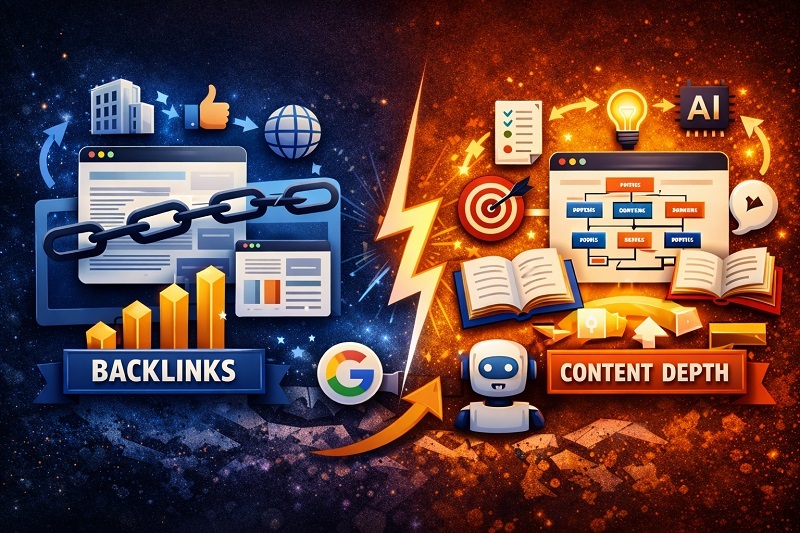
If you want to understand why having a lot of good content is more important than having lots of links to your website you should take a look at this guide on backlinks vs content depth that tells you everything you need to know about content depth and why it is so important now. The guide is very detailed. It will give you a deeper insight into why content depth now matters more, than backlinks.
1. Build Topical Authority in a Narrow Niche
To get a ranking without needing backlinks you have to make your website the best place to go for information on a particular subject. This means your website has to be the number one resource, for that topic.
How to build topical authority:
- Choose one very specific niche (e.g., “Texas homestead exemptions,” “beginner crochet patterns,” “budget gaming monitors”).
- Publish all subtopics, from beginner to advanced.
- Add step-by-step tutorials, examples, templates, and visuals.
- Create clusters of interconnected articles.
So you want to know why it works. The thing is, it just does. It works because of the way it is made. The people who made it really knew what they were doing. They made it so that it would work.. It does. It really does work. The way it works is pretty cool. It works like this.
- It has some parts
- These parts do things
The thing that makes it work is the way these parts work together. This is why it works. It works because all the parts work together. The parts of it work well together. This is why it works well. It is really great that it works.
Having authority means you are showing expertise in a certain area. This is important because Google can then confidently rank you highly even if you do not have a lot of backlinks, which can sometimes make it hard to get a ranking. Topical authority really helps Google see that you know what you are talking about so they can rank you even when you are facing challenges with backlinks.
2. Write Content That Fully Satisfies Search Intent
We need to write content that really gives people what they are looking for when they search for something.
This means our content should fully satisfy the search intent of people who are searching for this information. When people search for something they want to find content that answers their questions or solves their problems. Our content should do just that. We should focus on creating content that’s useful and relevant, to people who are searching for this topic and that fully satisfies their search intent.
Search intent is really powerful when it comes to ranking. It is like a superpower that helps the search results show up at the top. The search intent is what makes the difference, in ranking.
Types of intent:
- Informational: “how to rank a website without backlinks”
- Transactional: “best budget laptops for students”
- Comparisons: “WordPress vs Wix for beginners”
- Local: “car detailing near me”
Intent optimization checklist:
- Answer the main question in the first 2–3 sentences.
- Use scannable formatting (H2s, bullets, steps).
- Add examples, pros/cons, data, FAQs.
- Include screenshots or diagrams when possible.
When the information you provide is really good at answering what people are looking for your website can show up near the top of search results. This can even happen in competitive areas and you do not need links from other websites to make it happen. Your content is what makes the difference. If it is better, than what other people are offering then you can rank higher.
3. Optimize for AI Overviews (AIO-First Formatting)
AI search engines pull content that’s
- Things people look for on the internet
- Information that people want to see
- Stuff that people search for using AI search engines
AI search engines do this to help people find what they are looking for when they use AI search engines.
- Highly structured
- Direct
- Factual
- Cleanly formatted
- Easy to extract
Structure your articles with:
- Short paragraphs
- Step-by-step lists
- “How to” sections
- FAQs
- Definitions
- Tables
- Quick answers at the top
This style is really good, for AI Overviews. It helps your content. Makes it more likely that you will rank highly in search results without needing any backlinks. The AI Overviews really benefit from this style of writing.
4. Use Internal Linking Strategically
Internal links can take the place of some of the power that websites usually get from backlinks. This means that internal links can help with the ranking of a website like backlinks do. Internal links are important because they can give some of the power that backlinks give to a website.
Internal linking guidelines:
- Link from high-traffic pages to new ones.
- Use keyword-rich (but natural) anchor text.
- Build strong topical clusters.
Internal linking is really good for your website. It helps your website gain authority faster. This means you can get your website to rank higher in search results without needing backlinks from sites. Internal linking is important because it makes your website stronger and more trustworthy which is what internal linking is, about. Internal linking is a way to improve your website and get more people to visit it.
5. Target Low Competition, High Intent Keywords
People usually make mistakes when they are selecting keywords. This is the part where most beginners have trouble. Selecting keywords is really important. Most beginners get it wrong.
Look for the keywords that’re :
- Long-tail (4–7 words)
- Low competition
- Question-based
- Underserved by large sites
Using these keywords makes it easier for you to get a ranking without needing backlinks. These keywords are really helpful, for getting a ranking without backlinks.
There are some tools that you can use. They are free or you have to pay a little bit of money for extra features.
- Google Keyword Planner
- Ahrefs Free Tools
- SEMrush
- AlsoAsked
- AnswerThePublic
6. Improve User Experience (UX) and Technical SEO
Google wants to rank websites that load quickly are easy to use and do not have a lot of problems. Google thinks that websites should be fast so people can get the information they need without waiting. Google also wants websites to be usable which means people can find what they are looking for on the website.. Google wants websites to be stable which means the website does not crash or have a lot of errors. Google is looking for websites that’re fast, usable and stable because that is what people like.
Must-have technical elements:
- Fast loading (sub 2.5 seconds)
- Mobile-first design
- Clean site architecture
- Secure HTTPS
- Schema markup
- Clear header hierarchy
UX improvements:
- Larger fonts
- Clean formatting
- Strong contrast
- Simple navigation
Technical Search Engine Optimization and User Experience are really important for getting your website to rank highly in search results without needing links, from websites. Technical Search Engine Optimization and User Experience can make a difference.
7. Create High-Engagement Content Types
Google wants people to stay on a website for a while. It rewards that kind of content. When people stay on a website Google thinks the website has content, like Google. This is why Google rewards content that people stay on because Google likes it when users stay on a website.
High-engagement formats:
- Step-by-step guides
- Templates
- Checklists
- Case studies
- Free tools
- Calculators
- Infographics
- Real-world examples
If the information on your website is really useful it is a lot easier to get your website to show up near the top of search results without needing links, from websites. Your website can do well if your content is helpful. The better your content is, the easier it is to rank your website without backlinks.
8. Answer Questions Better Than Your Competitors
Google and AI search systems like Google put pages first that give answers to questions people often ask in a way that is easy to understand. Google does this so people can find what they are looking for quickly.
Your content should include:
- FAQs
- Definitions
- Examples
- Quick takeaways
- Pros and cons
This makes your content a good match for AI Overviews. It helps your ranking potential. Your content is a fit for AI Overviews because it is what they are looking for. This is why it increases your ranking potential, for AI Overviews.
9. Use On-Page SEO to Its Full Potential
Backlinks are optional, but on-page optimization is mandatory.
Core on-page elements:
- Exact keyword in title
- Semantic variations in headings
- Strong meta description
- Alt text for images
- Short, descriptive URLs
- Internal links
- FAQ schema
This plan is really helpful for people who are just starting out. It can help them get a ranking without needing any backlinks. Many beginners have been able to do this in, than 60 days with this strategy. The strategy of not using backlinks is what makes it work well for beginners to achieve ranking.
10. Stay Consistent for 30–90 Days
Google really likes it when people are consistent. Google wants to see that people are doing things the way all the time. This is because Google thinks that consistency is very important. Google will give rewards to people who’re consistent. The thing that Google rewards is consistency.
What posting frequency works well is something that people often think about. The posting frequency that works well for people is one that is consistent.
- The posting frequency that works well can be daily it can be weekly or it can be monthly it really depends on the posting frequency that works well for the people who are following you.
The key, to the posting frequency that works well is to make sure that you are posting enough that people do not forget about the posting frequency that works well but not so often that the posting frequency that works well becomes annoying.
Finding the posting frequency that works well can take some time so it is important to experiment with different posting frequencies to find the posting frequency that works well for you.
- 2–4 posts per week in early stages
- Aim for 30 helpful articles as a minimum
With consistency, it’s absolutely possible to rank a website without backlinks even in semi-competitive niches.
FAQs
1. Can You Rank Without Backlinks?
Yes. You can rank without backlinks by focusing on topical authority, user intent, internal links, and strong on-page SEO.
2. How to Rank Without Backlinks?
Publish complete, niche-focused content, optimize for AI Overviews, and ensure excellent user experience and internal linking.
3. How to Rank a Website Without Backlinks?
Build topical clusters, target low-competition keywords, and structure your content so it is AI-friendly.
4. Is It Possible to Rank Without Backlinks?
Yes. Thousands of niche sites rank entirely on content depth and search intent satisfaction.
5. How Long Does It Take to Rank Without Backlinks?
Most websites see results in 30–90 days depending on niche, quality, and keyword difficulty.
6. Why is My Site Not Ranking Without Backlinks?
Likely due to poor keyword selection, missing topical coverage, or weak technical SEO.
7. Does Google Allow Ranking Without Backlinks?
Yes. Google has repeatedly stated that high-quality content can outrank linked pages.
8. How to Get Traffic Without Backlinks?
Target long-tail keywords, publish helpful guides, use internal linking, and optimize for AI Overviews.
9. Can New Websites Rank Without Backlinks?
Absolutely. New sites often rank faster because they can cover niche topics more deeply than big sites.
10. Does Topical Authority Help You Rank Without Backlinks?
Yes. Strong topical coverage is one of the biggest ranking factors when no backlinks exist.
Final Thoughts
You can absolutely rank a website without backlinks in 2026. Focus on:
- Topical authority
- Search intent
- Structured, AI-friendly content
- Internal linking
- Strong UX and technical SEO
- Consistent publishing
Backlinks help, but they are no longer required—especially for niche and informational content.