
If you’ve ever sat in a hot car and wanted some relief, window tinting is your answer. Apart from giving your ride a sleek, polished look, it also helps keep you cool, block harmful UV rays and increases privacy. But with so many types of window tint films out there, how do you know which one is right for you?
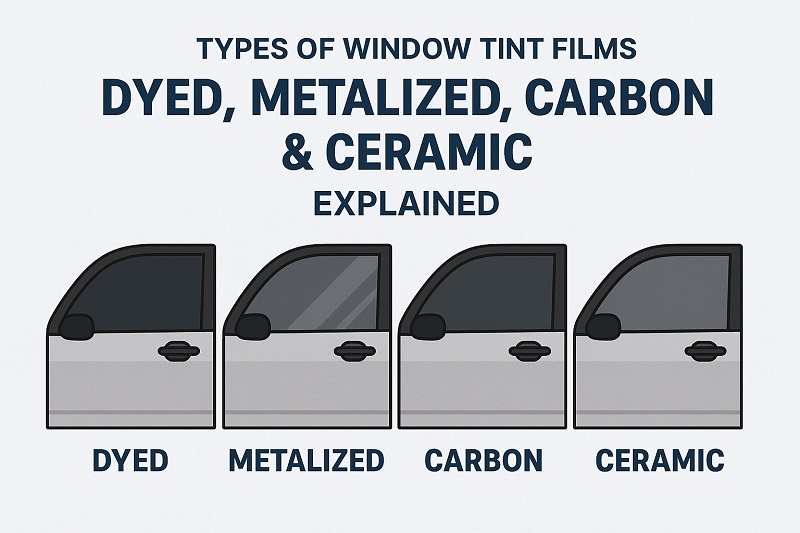
Let’s break down the most popular window tint types – tinted, metalized, carbon and ceramic – and help you choose the best one for your car.
What is window tint film?
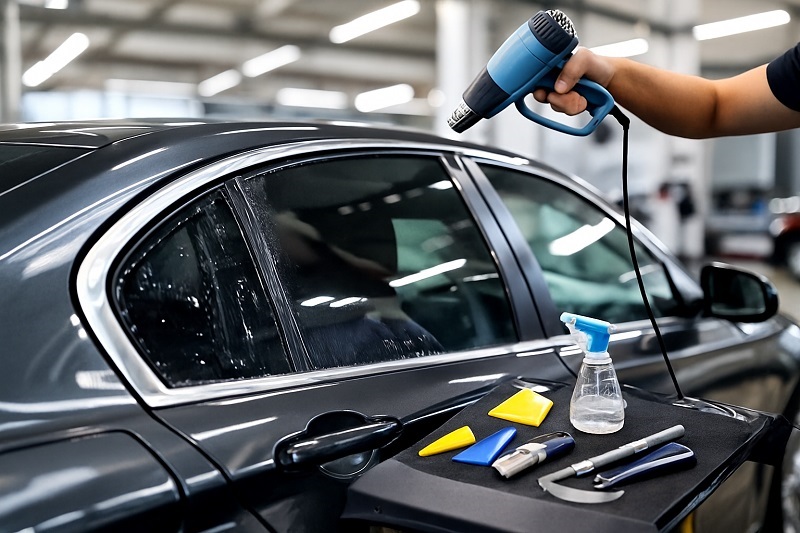
Window tint film is a thin, multilayer material that is applied to the inside of your car’s windows. Is this work? To block sunlight, heat and UV rays while improving appearance and comfort.
Most films are made from PET (polyester) and coated with various materials that control light and heat. The performance of a tint depends on what it is made of – and this is where each film type varies.
Why tint your car windows?
Before moving on to the types, let’s take a look at the benefits of tinting your car windows:
- Infrared keeps your cabin cool by trapping heat
- Reduces glare while driving
- Protects your car interior from fading
- provides privacy
- Enhances overall appearance and resale value
- Blocks up to 99% of harmful UV rays
Whether you want to increase comfort or simply make your car look nicer, tinting has benefits for everyone.
1. Tinted Window Tint Film
Best for: Budget-friendly style and privacy
What is this:
Tinted tint film is the most basic and affordable option. It uses a layer of dye between the adhesive and protective layers.
Pros
- Low cost – great for beginners
- Non-reflective, sleek look
- Provides decent privacy
- Does not interfere with GPS or phone signals
Cons:
- Provides limited heat rejection
- May fade or turn purple over time
- Shorter lifespan than other colors
If you’re looking for an easy way to darken your windows without spending a lot, tinted tint will do the trick. Just expect it to change sooner than premium options.
2. Metallized window tint film
Best for: Fast heat rejection and durability
What is this:
Metallized tint films are comprised of tiny metal particles that reflect sunlight and heat. They are stronger and last longer than color films.
Pros:
- Excellent UV and heat blocking
- Provides strength to windows (break resistance)
- Long lasting, does not fade easily
Cons:
- Reflective, shiny finish (some drivers dislike this look)
- May interfere with radio, GPS and phone signals
If you live in a hot climate and need strong heat control, a metallic tint can make a big difference. Just make sure your device still gets good signal reception!
3. Carbon window tint film
Best for: Style and high performance without signal problems
What is this:
Carbon tint film uses carbon particles that block infrared light, keeping your car cooler without the metallic sheen.
Pros:
- Great infrared heat rejection
- Matte Black Finish – No Mirror Look
- Does not fade with time
- No signal interference
- Excellent uv protection
Cons:
- More expensive than painted or metalized
- Slightly lower heat control than ceramic
Carbon Tint is ideal for drivers who want modern style and lasting performance without breaking the bank.
4. Ceramic Window Tint Film
Best for: Maximum performance and clarity
What is this:
Ceramic tint film is made from nano-ceramic particles – not metal or dye. This is a top-tier option when it comes to performance, clarity, and comfort.
Pros:
- Superior UV and heat rejection
- Blocks up to 95% of infrared rays
- Crystal-clear visibility day or night
- No signal interference
- Extremely durable and color-stable
Cons:
- Most Expensive Tint Type
- May not appear as dark as tinted color (depends on VLT level)
If you want the best window tint film for comfort, protection, and longevity, ceramic tint is the best choice. Is it worth the investment.
Each tint film type comes with its own advantages, durability, and performance levels. But pricing can vary significantly depending on which one you choose. To learn more about average pricing across different tint types and vehicles, check out our detailed guide — How Much Does Car Window Tinting Cost in USA.
Comparison Table: Types of Window Tint Films
| Tint Type | Heat Rejection | UV Blocking | Signal Interference | Appearance | Cost | Durability |
|---|---|---|---|---|---|---|
| Dyed | ★★☆☆☆ | ★★★☆☆ | None | Matte/Dark | Low | Fair |
| Metalized | ★★★★☆ | ★★★★☆ | Possible | Shiny/Reflective | Medium | High |
| Carbon | ★★★★☆ | ★★★★☆ | None | Matte Black | High | Very High |
| Ceramic | ★★★★★ | ★★★★★ | None | Clear/Neutral | Premium | Excellent |
How to choose the right color for your car
Not sure which one to go for? Here’s how to decide:
- On budget? Go with a tinted color.
- Hot climate or hot sun? Try metalized or ceramic.
- Don’t want any signal problems? Avoid metallized; Choose carbon or ceramic.
- Care about appearance and longevity? Carbon is best.
- Want top performance? Ceramic wins every time.
Also, check your local tint laws for permitted darkness levels before installing.
For a complete walkthrough on choosing the ideal film and understanding tint laws, read our Ultimate Guide to Car Window Tinting
Tint Installation & Care Tips
- Always choose a professional installer for smooth, bubble-free results.
- Do not close your windows for 3-5 days after painting.
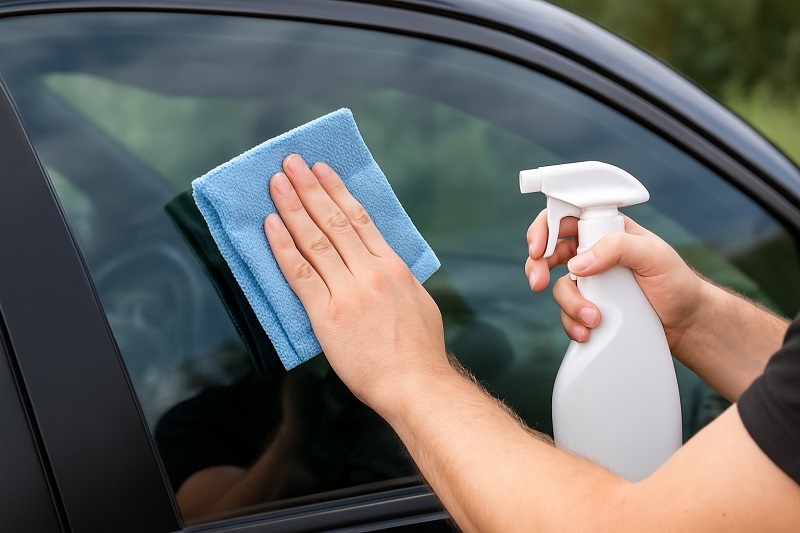
- Clean only with ammonia-free glass cleaner and microfiber cloth.
- Avoid scratching or scratching the edges.
With proper care, good quality paint can last 8-15 years.
Frequently Asked Questions (FAQ)
The main types are dyed, metalized, carbon, and ceramic. Some premium films combine materials (hybrid or crystalline).
Ceramic tint is the best overall — high heat rejection, UV protection, and no signal interference.
Carbon is more affordable and stylish; ceramic blocks more heat and lasts longer.
Yes, its metallic particles can interfere with radio, GPS, or mobile signals.
Absolutely. Quality tints can block up to 80–95% of infrared heat, keeping your car cooler.
Dyed films last 3–5 years, while ceramic and carbon films can last 10+ years.
DIY kits exist, but professional installation gives better alignment, fewer bubbles, and longer life.
Most premium films block 99% of UV rays, but cheaper dyed ones may block less.
Not always. Darkness doesn’t equal better performance — ceramic tints can be light and still block heat effectively.
No. The old film should be removed first to avoid peeling and bubbling.
Final Thoughts
Choosing between different types of window tint films doesn’t have to be confusing.
If you want an affordable upgrade, Dyed works fine. For long-lasting comfort and performance, choose ceramic or carbon tint film.
Whichever you choose, you’ll enjoy a better drive, more privacy and a stylish finish that makes your car stand out.