

Among the most excellent upgrades for improving comfort, privacy, and energy efficiency in both vehicles and homes is window tinting. But when it is time to get it done, you will likely face the question:
Should I do it myself or hire a professional to install the window tint?
In this guide, we’ll break down the pros, cons, costs, and performance differences between DIY vs. professional window tinting to find the right choice for your budget, skill level, and long-term goals.
What is window tinting?
Tinting windows involves attaching a thin, transparent film on the surfaces of glass to achieve benefits like:
- UV protection that helps limit sun damage to skin and interiors
- Reduce heat to keep the interior cooler.
- Glare control for more comfortable driving or living spaces
- Enhanced privacy without loss of visibility
- Aesthetic appeal for cars, homes, or offices
There are several types of films: dyed, metalized, carbon, and ceramic, which all offer a different level of performance regarding heat rejection and durability.
To understand the different tint film types, benefits, and legal limits in detail, check out The Ultimate Guide to Car Window Tinting for a complete overview.
DIY Window Tinting
What It Entails
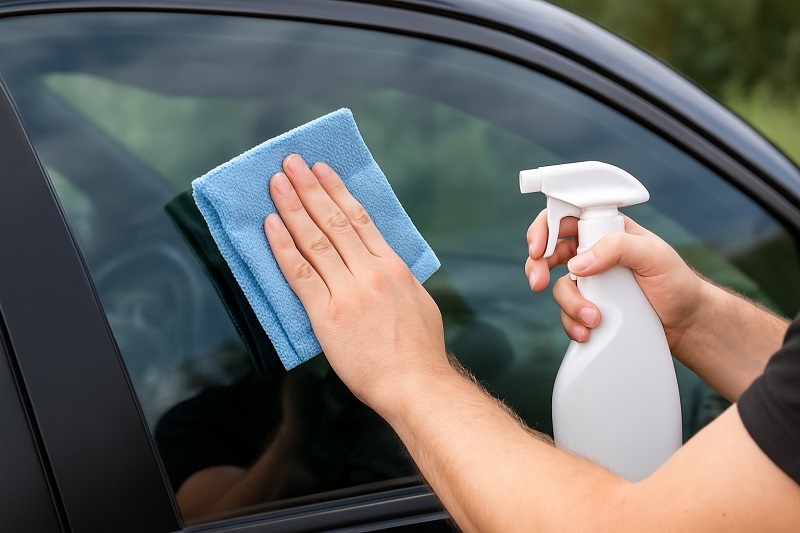
DIY tinting involves buying a tint kit or roll and installing it yourself. The process encompasses:
- Cleaning the glass thoroughly
- Measuring and cutting the film
- Application by using a slip solution
- Squeegeeing out air bubbles and trimming edges
Pros
- Lower cost: Usually $20–$80 for a full car kit
- Flexibility: You can do it anytime at your convenience
- Satisfaction: Many DIYers enjoy the satisfaction of completing the project themselves.
Cons
- Skill-dependent: any small mistake may lead to bubbles, creases, or peeling.
- Poor film quality: Most consumer kits use cheaper materials.
- No warranty: Do-it-yourself jobs do not come with any service guarantees.
- Legal-Compliance Risks: Different states in the U.S. have varying tint laws, and a DIY installer may miss them.
Best for: Small, flat windows or experienced DIYers who don’t mind a learning curve.
Selecting the wrong tint level can make your DIY job illegal or reduce visibility. Learn how to avoid this by following our step-by-step guide on choosing the right tint percentage for your vehicle
Professional Window Tinting
What It Entails
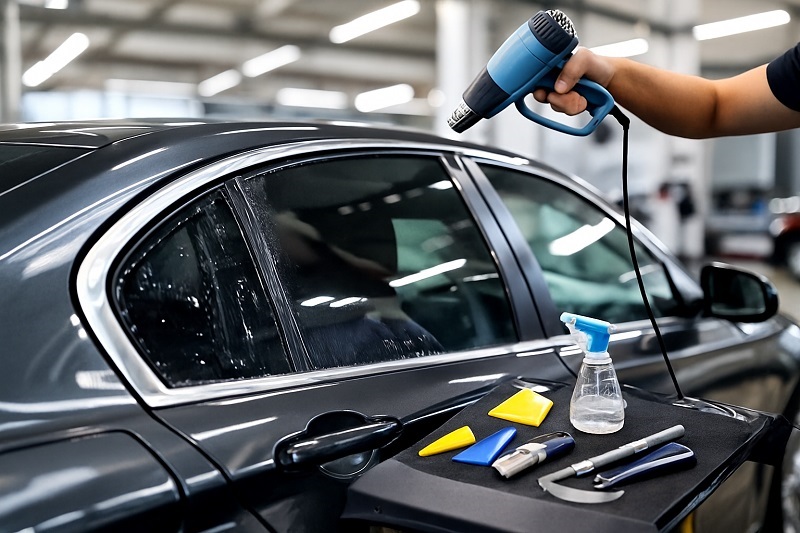
Professional installers handle everything, from surface preparation to film selection and installation, usually in a dust-free environment.
They use computer-cut patterns, specialized heat tools, and premium-grade films to ensure a flawless finish.
Pros
- Expert craftsmanship: Smooth, bubble-free installation
- Better materials: Ceramic and carbon films block up to 99% of UV rays.
- Warranty: Peeling, fading, cracking – against these, it protects.
- Legalised assurance: Pros ensure tint levels to meet your state law requirements.
- Time-saving: Generally completed within 1–3 hours for a vehicle
Cons
- Higher upfront cost: Typically $150–$400 for a standard car, depending on film type
- Scheduling required: You’ll need an appointment
- Less DIY satisfaction: Not a hands-on experience
Best for: Those who desire top-notch results, longevity, and warranty protection.
DIY vs. Professional Window Tinting: Side-by-Side Comparison
| Factor | DIY Tinting | Professional Tinting |
|---|---|---|
| Average Cost | $20–$80 | $150–$400 (cars), $6–$10/sq. ft (homes) |
| Skill Level | Moderate to high | Expert, trained technicians |
| Film Quality | Basic dyed films | Premium ceramic or carbon films |
| Installation Time | 4–8 hours (DIY car) | 1–3 hours (full car) |
| Warranty | Usually none | 5–10 year or lifetime warranty |
| Durability | 2–4 years | 5–10 years+ |
| Aesthetics | May show imperfections | Clean, professional finish |
| Legal Compliance | Must self-check state VLT laws | Verified by installer |
Cost vs. Long-Term Value
While DIY tinting is cheaper on the front end, it’s more costly when it bubbles, peels, or perhaps isn’t stopping enough heat and thus requires reinstallation.
Professional tinting:
- Uses advanced materials for better UV and infrared rejection
- Keeps energy costs lower by keeping interiors cooler
- Adds resale value to your car or property with warranty protection
- Most people consider professional installation worth the added expense if performance and peace of mind are your top priorities.
When DIY Makes Sense
DIY tinting might be right for you if:
- You’re on a tight budget
- You enjoy doing hands-on projects.
- You’re tinting flat, simple windows -such as small home windows
- You don’t mind learning through trial and error
When to Choose Professional Tinting
Go professional if:
- You want a perfect, durable finish.
- You’re tinting a vehicle-especially curved rear windows
- You live in a hot climate or drive long hours in the sun
- You want legally compliant tinting for your state
- You prefer a service that is covered by a warranty.
Tips Before Deciding
- Check your state’s tint laws for visible light transmission (VLT) limits
- Film type comparison: Dyed are budget, Carbon mid-range, Ceramic are premium.
- Read warranty terms carefully. Some cover fading and peeling, others don’t
- Ask professional installers for film samples and performance specifications
- For the DIYers, work indoors, clean well, and use good quality tint film.
Conclusion
In the battle of DIY vs. professional window tinting, no one winner fits all. Choose DIY if you’re feeling confident, have a small job, and want to save money. Choose Professional if you want professional results, long-term durability, and legality. It usually means that, for cars and high-value property, professional tinting provides better performance and peace of mind, hence it’s a better investment for U.S. consumers.
Top 10 FAQs About DIY vs. Professional Window Tinting
Only if you are comfortable with precise work and you don’t mind minor imperfections.
$150–$400 for a full car, or $6–$10 per square foot for residential windows.
Typical problems include bubbling, peeling, poor registration, and shortened film life.
Yes. Professional ceramic tints can last 10+ years, while DIY films may last 2–4 years.
Yes—each U.S. state has specific limits for VLT in car windows.
Removal is possible but time-consuming, especially if the film has baked onto the glass.
Ceramic tint is far better: it blocks up to 99% of UV rays and 80% of infrared heat.
Professionally done, it can increase resale value; poor DIY jobs can lower it.
Yes-reduces heat gain in summer and can lower air-conditioning costs.
Most U.S. installers give 5-year to lifetime warranties – against defects and peeling.