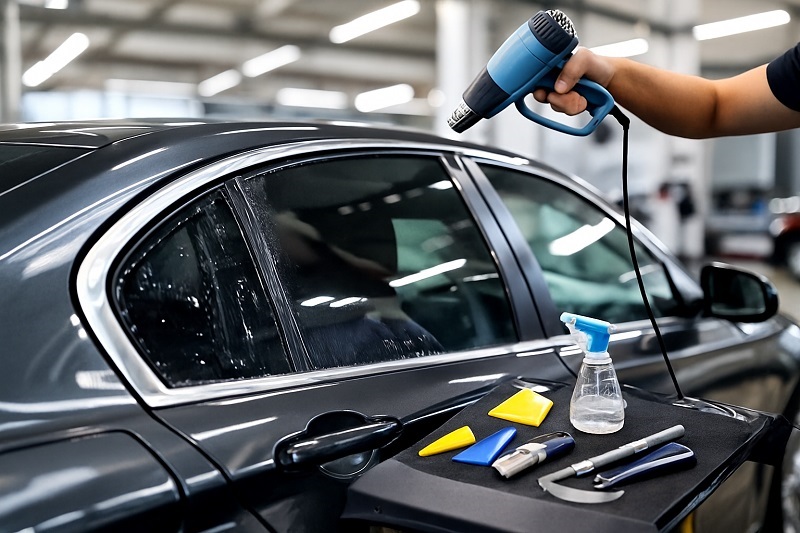


If you’ve ever thought, “Is car window tinting legal in the USA?”, you’re not alone. Window tinting continues to be a popular modification for privacy, heat reduction, and aesthetics, but the laws can differ greatly between states. In this detailed guide, crafted for U.S. readers, we will walk you through:
- How VLT (Visible Light Transmission) works
- State-by-state variations and key examples
- Exemptions, penalties and compliance tips
What Does “Legal Window Tinting” Really Mean?
Window tinting is legal in most states in the U.S. — but only if you abide by the specifics in the state in which your vehicle is registered. The core legal criteria include:
- VLT limits: the minimum percentage of visible light that has to pass through the tinted window.
Placement of window: There are different regulations concerning front side windows, rear side windows, rear windshield, and windshield. - Reflectivity and color restrictions: Most states have restrictions on mirrored finishes, certain colors (e.g., red/amber) or on how reflective the film can be.
- Exemptions and equipment: Some states allow darker tints for medical reasons or require dual side mirrors if rear windows are heavily tinted.
- In short: yes, you can tint your car, but you must understand and follow your state’s rules for tinting to avoid fines, repairs, or having the tint removed.
Understanding VLT: Visible Light Transmission
- Definition: VLT is defined as the amount of visible light that is allowed to pass through both the window glass and the tint film.
- Interpretation: Higher VLT equates to lighter tint: more light passes through. Lower VLT equates to darker tint: less light passes.
- Why it matters: Law enforcement uses VLT limits to determine whether your tint is within legal bounds. A film that does not meet the minimum VLT may be considered illegal.
Understanding VLT helps in picking and installing tint legally and safely.
State Laws & VLT Limits: What You Should Know
Because state laws and regulations vary so much, here are some general patterns and a few example states to illustrate the diversity:
General patterns
- Many states allow any shade or very dark tint on rear side windows & rear windshield, but have strict minimum VLTs for front side windows.
- Windshields often only allow tinting above the manufacturer’s AS-1 line or a specified number of inches from top.
- Additionally, some states have mirror/reflectivity or colour bans in addition to their VLT limits.
Example states
- California: The front side windows have to let in at least 70% VLT, meaning “light” tint. The rear windows can be darker.
- Texas: Front side windows minimum VLT about 25%; rear windows may have “any shade” in many cases.
- Florida: Front side windows minimum ~28% VLT; rear windows minimum ~15%
Because of this variation, do not assume your tint is legal just because it looks similar to a friend’s. Always check on your state’s current law.
Medical Exemptions & Special Cases
- Medical Exemptions: If you have a light-sensitive medical condition, such as lupus or melanoma, you may be granted a special permit or certificate to get a darker tint than what is usually allowed.
- Factory tint / privacy glass: Some vehicles have factory tinted glass (privacy glass); laws often treat this differently, but you still need to check compliance.
- Commercial vehicles versus passenger vehicles: Some states have varying limits for taxis, limousines, trucks or SUVs.
Penalties and Enforcement
Failure to comply with legal tint limitations or reflectivity may result in:
- Traffic stops and citation from law enforcement
- Fines or possible court appearances
- Insurance issues if the tint impacts crash visibility or is not compliant
Also, many states update their laws periodically; always ensure your installer follows the updated rules.
Practical Tips for Vehicle Owners
Check your state law first: both front side/VLT and rear, plus reflectivity.
- Choose an installer who is professional, familiar with your state’s rules: AS-1 line, dual mirrors, certification.
Ask for documentation or compliance label from installer, such as film certification, permit or compliance sticker. - Keep a copy of medical exemption if you use one.
When traveling across state lines, beware: law enforcement in different states may have stricter rules. - For resale or transfers: Make sure your tint is within the legal limit, lest the next owner may face compliance issues.
Summary
To answer the main question: Is car window tinting legal in the USA? — Yes, it is legal in most states as long as you comply with that state’s rules.
The key factors to understand: VLT limits, window location distinctions, reflectivity/colour restrictions, and possible exemptions. Because laws differ significantly across states, always check your local regulations before applying tint. Stay informed, choose a professional installer, and maintain documentation to remain compliant and enjoy the benefits of window tinting — legally.
Once you know your state’s legal limits, the next step is deciding whether to install the tint yourself or hire a pro. Learn the key differences in DIY vs. Professional Window Tinting to make the right choice for your car.
If you’re new to tinting, check out The Ultimate Guide to Car Window Tinting to understand types of tints, benefits, and installation tips before exploring legal limits.
FAQs:
Yes — but legality depends on the state where your vehicle is registered. Each state sets its own VLT limits, reflectivity and color restrictions. You must comply with your state’s specific law.
It varies. For example, California requires front side windows to allow at least 70% VLT, while Texas allows front windows as low as 25% VLT. Many states place fewer limits on rear side and rear windows.
“Limo tint” (often ~5% VLT) is generally not allowed on front side windows in most states. Very dark rear windows may be allowed in some states, but front driver-side windows almost always have more strict limits placed on them.
Possibly. Most states permit a medical exemption, if you have a documented condition, such as photosensitivity. You will often be required to carry a doctor’s statement in the vehicle; there may be additional state-specific requirements to follow.
Factory “privacy glass” may already have a darker VLT (often 15-26%) and many states treat it differently. However, if you add after-market film, you must still ensure all windows comply with local laws.
Yes. Many states impose stricter limits on front side windows and windshield than on rear side windows or rear windshield. In some states, rear windows may have “any shade” allowed
You may receive a traffic citation, be required to remove or replace the tint (“fix-it” ticket), be fined, or face additional legal/insurance consequences. Always ensure tint complies before installing.