

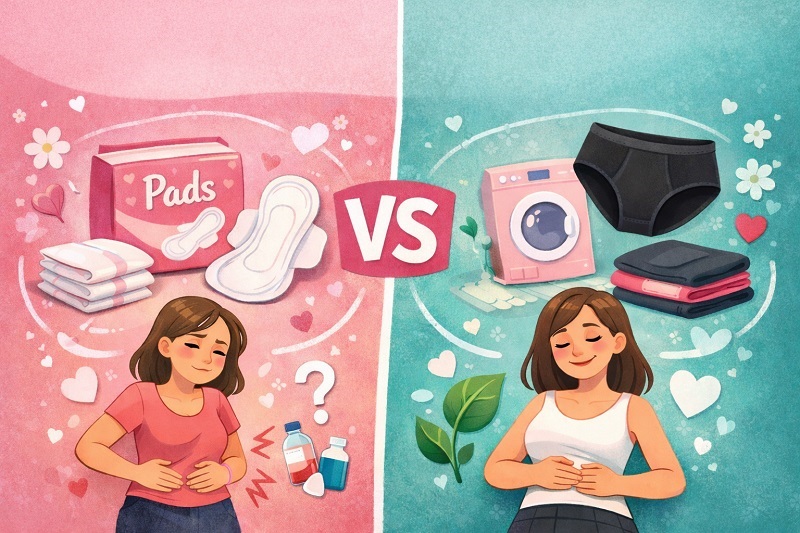
Periods are a regular part of life, but the way they are managed has barely changed for decades. Disposable pads have long been treated as the default, often chosen out of habit rather than intention. While they offer short-term convenience, many menstruators are now beginning to question whether single-use products are truly the best option for their bodies.
This shift in thinking has brought reusable alternatives into the spotlight. The conversation around reusable period panties and other eco-friendly period products is not just about sustainability anymore. It is increasingly about comfort, skin health, and how period care fits into everyday life.
Understanding how reusable and disposable products differ can help people make more informed choices about what supports their health best.
Disposable Pads And Their Impact On The Body
Disposable pads are designed for short-term wear. Most need to be changed every four to six hours and are made with layers of plastic-backed sheets, adhesives, and synthetic fibres. While effective at absorbing blood and convenient to find, these materials can trap heat and moisture against the skin, which can lead to discomfort over time.
Prolonged dampness and friction are common triggers for rashes, itching, or irritation, particularly during long days, travel, or overnight use. Pads are also known to shift with the slightest movement, increasing anxiety around leaks and requiring frequent checking or changing.
Another aspect often overlooked is frequency of exposure. Over a lifetime, a menstruator may use thousands of disposable pads. That is repeated contact with materials intended for brief use, cycle after cycle. While disposable products remain familiar, familiarity does not always equal comfort or long-term suitability.
How Reusable Period Care Works Differently
Reusable period care takes a different approach. Reusable period panties are designed to look and feel like regular underwear but include built-in absorbent layers that securely hold menstrual flow. Instead of layering or inserting products, absorption is integrated directly into the body of the underwear, therefore making it comfortable and securely holding menstrual flow without the need for constant checking.
Mahina’s reusable period panties can be worn for up to 12 hours and can hold up to 5 pads’ worth of menstrual flow at the highest absorbency level. This means fewer interruptions and less stress around finding restrooms or carrying spare products.
Mahina’s products undergo testing in NABL-accredited laboratories to ensure they are safe for prolonged contact with the body. Every component that touches the skin is assessed against recognised EU and US safety standards. This process confirms the absence of toxic chemicals, restricted materials, and banned amines, ensuring that protection never comes at the cost of body safety.
For those new to reusable care, the simplicity is often what stands out. There is no learning curve, no insertion, and no disposal during the day. After use, the period underwear is hand- or machine-washed and reused, which makes it a part of a familiar laundry routine.
The Environmental Link
Personal health and environmental impact are closely connected. Disposable pads often contain plastic components that remain in the environment long after use and can take centuries to decompose. For menstruators concerned about waste, this raises broader questions about repeated exposure to plastic-heavy period products.
Planet-friendly period products aim to reduce this burden while also supporting comfort. One pair of Mahina’s reusable period underwear can replace hundreds of disposable pads over its lifespan as just one period panty can be washed and reused for around 2 years. This significantly lowers waste while encouraging a more mindful approach to menstrual hygiene.
Making The Switch: What To Consider
Switching to reusable period care doesn’t have to be all-or-nothing. Many people start gradually, using reusable period panties on lighter days or at night before expanding their routine. This allows time to understand what feels comfortable and suits individual flow patterns.
Reusable options can be especially helpful for people with sensitive skin, heavy or irregular periods, or long days where frequent changes are inconvenient. Teenagers and first-time users often appreciate the underwear-like feel and reduced mental load of not having to check for stains every time they get up.
Ultimately, choosing between reusable and disposable period care is a personal decision. What matters most is selecting products that support comfort, hygiene, and peace of mind.
Periods may be unavoidable, but discomfort does not have to be. For many menstruators, eco-friendly period products and reusable period care offer a calmer way to manage their cycle. Making a choice that prioritises health can transform how periods are experienced, one cycle at a time.
